This year’s edition will honor José Vega Santana, better known as the Payaso Remi; Olympic medalist Jasmine Camacho-Quinn; and rapper Vico C.
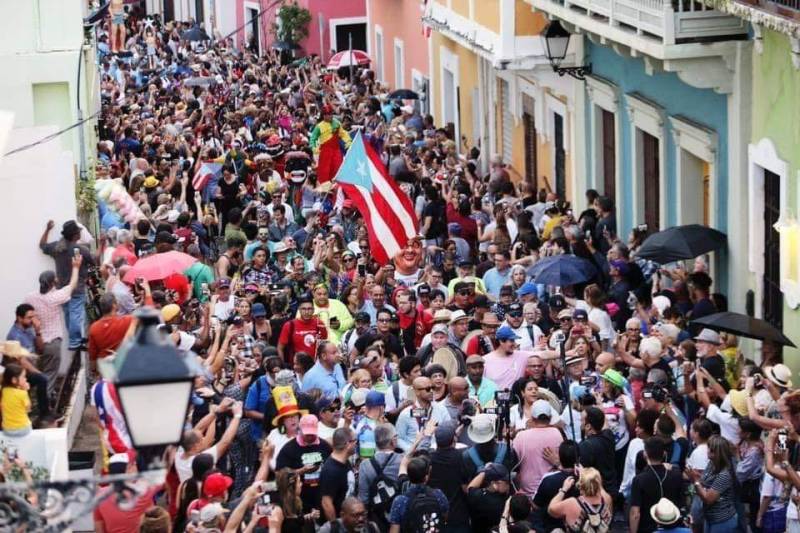
The San Sebastián Street Festival will be held from Jan. 16 to 19 with the theme “55 Years of History and Tradition.”
Known as one of the most important cultural events in Puerto Rico and the region, the annual festival seeks to innovate and provide a platform for diverse artistic expressions.
This year’s edition will honor José Vega Santana, better known as the Payaso Remi; Olympic medalist Jasmine Camacho-Quinn; and rapper Vico C.
As always, hundreds of artisans will showcase their creations in various areas of Old San Juan.
One of the new additions is a historical and cultural tour called “Los adoquines de San Sebastián,” which will highlight the history of the famous street and the early editions of the celebrations, which were originally established as a tribute to Saint Sebastian, the community’s patron.
The artistic lineup will feature performances by Manny Manuel, Olga Tañón, El Gran Combo, La Secta, Carlos Vives, and Vico C, among others.
Today, residents and tourists alike enjoy the festival, however, despite its popularity, you may not know these facts:
Origins in religious devotion
The first known procession and mass dedicated to Saint Sebastian in San Juan took place on Jan. 20, 1533. At that time, Saint Sebastian was invoked against the plague and enemies of the Catholic religion. The San Sebastián Street Festival began in 1954 as a parish initiative to raise funds for a local church and honor Saint Sebastian. After a hiatus, it was revived in the 1970s by historian Ricardo Alegría.
Los cabezudos
The tradition of the big heads (cabezudos) began during the time of Father Madrazo, founder of the festivities. At that time, in 1954, two enormous statues of the Catholic Monarchs and some dwarves were paraded. Years later, Doña Rafaela Balladares, who helped revive the festivities, restored the cabezudos, creating figures inspired by Puerto Rican culture and society’s characters.
Recognized internationally
In 2016, National Geographic highlighted the San Sebastián Street Festival as the main reason people should visit Puerto Rico during the winter season.
Significant economic impact
The festival generates millions of dollars in revenue for San Juan, especially for Old San Juan, drawing locals and tourists alike. According to data from the San Juan municipality, this year’s event is expected to generate an economic impact of $61 million.
Unique music traditions
Beyond popular genres like salsa and reggaeton, the festival celebrates traditional Puerto Rican music, including trova and décimas performances. This year, the event “San Sebastián al ritmo de la bomba” will take place at 3:00 p.m. in Plaza de la Barandilla, featuring eight delegations from various historical regions of Puerto Rican bomba dance.