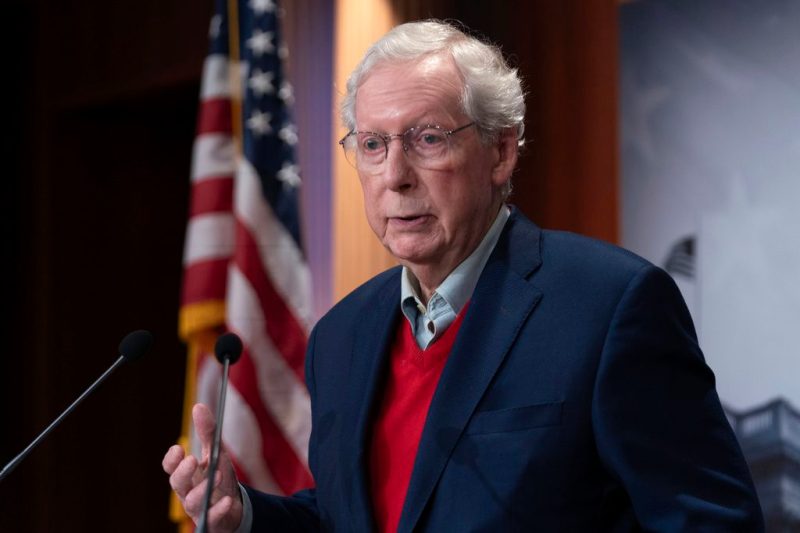
McConnell asserted that the Republican-controlled Senate, set to take office in January, will safeguard the filibuster rule and resist any efforts to admit Puerto Rico or Washington D.C. as states.
In a strongly worded statement, Senate Republican Leader Mitch McConnell made it clear in the first press conference following Donald Trump’s electoral victory that Republicans will not consider adding new states to the union.
This is a bucket of cold water for Puerto Rico’s New Progressive Party (PNP), which pushes statehood.
McConnell asserted that the Republican-controlled Senate, set to take office in January, will safeguard the filibuster rule and resist any efforts to admit Puerto Rico or Washington D.C. as states.
“The filibuster will remain intact. We will not allow new states that would provide a partisan advantage to the other side,” McConnell said, underscoring his belief that the incoming Republican majority will act as a barrier against what he called a “socialist agenda” aimed at shifting Senate control. He added, “This new Republican majority will prevent any attempt to change the rules for short-term political gain.”
McConnell’s remarks follow years of Republican opposition to statehood for Puerto Rico and D.C.
Republicans’ upcoming majority in the Senate is expected to reach at least 52 seats when the 119th Congress convenes. With the filibuster rule still requiring 60 votes to advance most legislation, the new Republican majority would have the leverage to block any bill aiming to expand statehood.
Reactions from Puerto Rico
The news comes as a setback to the PNP, which has long promoted Puerto Rican statehood as a path to equal representation and federal benefits for the island. Tuesday’s general election on the island included a non-binding referendum on statehood, which received 56.8% of votes. Although statehood achieved a majority, critics argue that the high number of blank ballots—left empty as a form of protest by opposition parties—complicates the result.
In a symbolic presidential ballot, 74% of Puerto Rican voters expressed preference for Vice President Kamala Harris over President Trump, further reflecting the island’s general political leanings and its displeasure with the former president’s treatment of Puerto Ricans.
A Longstanding Divide
This isn’t the first time McConnell has opposed statehood for Puerto Rico and D.C. In previous statements, he has argued that adding these regions as states would permanently alter the Senate’s balance of power, giving Democrats an advantage. Back in August, McConnell expressed concern over the prospect of a Democratic majority dismantling the filibuster and admitting Puerto Rico and D.C., saying, “That would mean four new Democratic senators forever.” He even described that scenario as “a nightmare”.
Looking Ahead: The Future of Puerto Rican Statehood
The question of statehood for Puerto Rico has divided American lawmakers for decades, and the Republican victory in the Senate appears to further cement this divide. In the race for the Senate majority leader role, contenders like John Cornyn of Texas and Rick Scott of Florida have held varied views on Puerto Rico. Cornyn has spoken out against statehood, while Scott has expressed a need for Puerto Rico to first strengthen its economy, though he has not backed statehood bills.