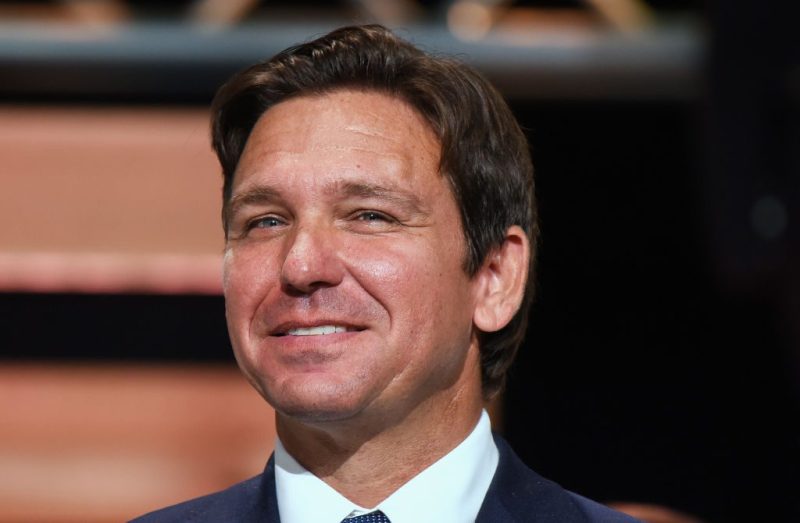
Proponents of Amendment 4 are calling DeSantis’ attempts to change the citizen-led constitutional amendment process “an attack on democracy itself.”
On Monday, as Gov. Ron DeSantis called to convene a special legislative session to boost President-elect Donald Trump’s planned crackdown on undocumented immigrants, the Florida Republican also pushed for changes to the state’s citizen-led constitutional amendment process.
During a press conference in Tallahassee, DeSantis proposed establishing new rules to verify signatures collected in petition drives. University of Florida political science professor Daniel Smith told Axios that he expects the special session could yield more rules for petition gatherers, increased filing fees for petition groups, or shorter timelines for gathering signatures.
To explain why his administration believes reforms are needed, DeSantis pointed to the Amendment 4 abortion rights initiative that would have nullified the state’s current six-week abortion ban.
The governor, who last year accused Floridians Protecting Freedom (FPF), the political committee behind Amendment 4, of petition fraud, cited his administration’s investigation into the more than one million signatures gathered to support the measure which sought to expand abortion access across the Sunshine State.
RELATED: DeSantis claims he’s “exempt” from law banning interference with Amendment 4
Proponents of Amendment 4 called DeSantis’ accusations of petition fraud and attempts to change the constitutional amendment process “an attack on democracy itself” and a clear signal that he wants to thwart a process that’s been used to, for example, increase the minimum wage to $15 and fight to restore voting rights to people with felony convictions.
“This is a deliberate attempt to erode trust in a process that has been a lifeline for Floridians to address issues ignored by politicians in power,” said Keisha Mulfort, spokesperson for the American Civil Liberties Union of Florida, which helped put Amendment 4 on the ballot. The measure failed to pass despite receiving 58% of the vote. The amendment needed at least 60% of the vote to pass. That’s because in 2006, the Republican-majority Florida Legislature led a successful ballot campaign to raise the threshold to pass amendments from 50% to 60%.
DeSantis’ requested special session also seeks to crack down on undocumented immigrants and eliminate a loophole giving undocumented immigrants access to in-state tuition rates.
However, the leaders of the Florida Senate and House have questioned the need for the special session proposed to begin Jan. 27.
“While the Governor discussed fragments of ideas for a special session he plans to start in just fourteen days, he did not release any actual bill language or even meaningful details for legislators and our constituents to consider,” Senate President Ben Albritton and House Speaker Daniel Perez said in a joint statement, adding that “as the people’s elected representatives, the Legislature, not the Governor, will decide when and what legislation we consider.”